Home page " Car-sharing: What parents need to know – Part I: You as the driver

Car-sharing: What parents need to know – Part I: You as the driver

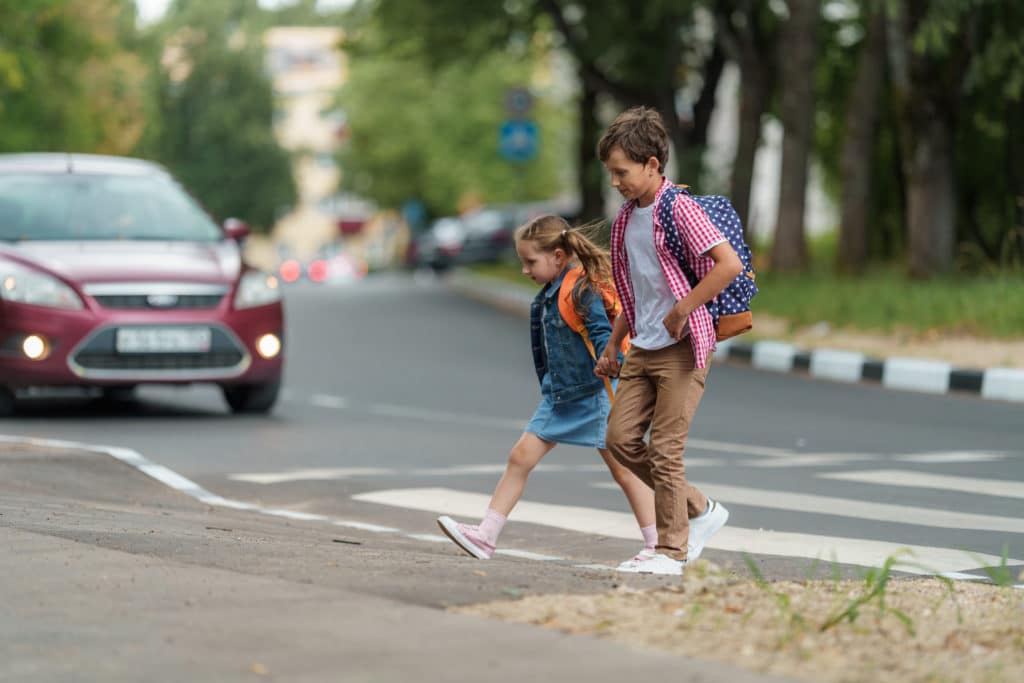
Zwei Kinder mit Schulranzen überqueren einen Zebrastreifen, im Hintergrund ein heranfahrendes Auto, Symbolbild für Unfallgefahr
Carpooling on the way to school ©shutterstock.com/ Alexander_Safonov
Table of contents: Car-sharing: What parents need to know – Part I: You as the driver

Whether it’s the daily journey to school or a lift to the sports club: the „parent taxi“ is part of everyday life for many families. Organised car-sharing schemes save time, help protect the environment and ease the strain on rush-hour traffic. But what happens if there’s a collision on the way to school? Who covers the medical costs for the children travelling in the car? And in which cases does statutory accident insurance provide cover, and when is the driver personally liable through their motor vehicle liability insurance?

In diesem Ratgeber beleuchten wir die Rechtslage rund um Fahrgemeinschaften, den Versicherungsschutz auf dem Schulweg und die konkreten Schritte zur fairen Schadensregulierung. Welche Regelungen gelten, wenn Sie nicht selbst fahren, sondern Ihr Kind bei einer Fahrgemeinschaft mitfährt, erfahren Sie im zweiten Teil unserer Ratgeberreihe.

In brief

  • Legal protection: Children are covered by statutory accident insurance (the federal states’ accident insurance funds) whilst travelling directly to and from school.
  • Car-sharing schemes are given preferential treatment: Organised car-sharing schemes set up by parents are covered by statutory accident insurance. This applies also for necessary detours to pick up the children.
  • Restrictions on the freedom to choose one’s doctor: Following an accident on the way to school resulting in injuries, it is essential that a Accident and Health Insurance Medical Examiner (D-Arzt) can be visited.
  • Property damage & liability: Statutory accident insurance covers personal injury. The motor vehicle liability insurance of the person who caused the accident is generally liable for damage to the vehicle or any items carried in it, as well as for claims arising from contributory negligence.

A closer look at the ‘parent taxi’: risks, statistics and the ban on parent taxis

Every morning, similar scenes unfold outside primary and secondary schools: double-parking, blocked access roads, and frantic getting in and out of cars. The „parent taxi“ phenomenon regularly creates dangerous situations right outside the school gates.

Statistics on road traffic accidents involving children 

The accident figures highlight the importance of this issue in road traffic:

  • According to the Federal Statistical Office (Destatis), a total of 29,270 children under the age of 15 in road traffic accidents.
  • Statistically speaking, a child is injured in a road traffic accident roughly every 18 minutes.
  • The morning hours between 7.00 and 8.00 am are particularly critical – precisely the time when children are on their way to school.
  • Whilst younger children are most frequently involved in accidents as car passengers (approx. 58 %), older schoolchildren are more likely to be involved in accidents as cyclists or pedestrians.

Debate over the ban on parent taxis 

Due to the disruption and chaotic situation outside school buildings, associations and local authorities are calling for stricter measures, including temporary traffic bans or resident-only zones („parent taxi ban“). So-called „school streets“ are increasingly being introduced, which are closed to motor vehicle traffic at drop-off and pick-up times in order to make children’s journeys to and from school safer. However, there is as yet no general “parent taxi” ban.

Basic information on accidents on the way to school: definition & insurance cover

An accident on the way to school is narrowly defined in legal terms and is subject to specific provisions under German social security law.

Definition of an accident on the way to school 

A Accident on the way to school (legally defined as a ‘commuting accident’) occurs when the accident takes place on the direct route between the home and the school or a school event.

Who pays for an accident on the way to school? 

Insurance cover is provided by the statutory accident insurance funds of the respective federal states. Statutory accident insurance applies regardless of whether the child is travelling on foot, by bicycle, by bus or as a passenger in a car.

Scope of cover under statutory accident insurance:

  • Coverage of all necessary medical treatment costs and medical rehabilitation measures.
  • No co-payments or practice fees for parents.
  • Compensation for permanent damage to health (e.g. injury pension). 

Note regarding property damage

 Statutory accident insurance generally covers no damage to property (such as damaged clothing, school bags or damage to a car). The only exception is medical aids directly related to a personal injury (e.g. glasses broken in an accident). The motor vehicle liability insurance of the person who caused the accident must cover any other property damage.

Do you want clarity and support with your road accident?

Accident victims like you get the best support from fairforce.one.

Have your accident reported now free of charge and without obligation by our regulation specialists.

Carpooling & Detours: When does the driver’s insurance cover apply?

When parents take turns driving several schoolchildren to school, the question arises: does their own child – or a child travelling with them – lose their statutory insurance cover if they take a detour to pick up other children?

Insurance cover for organised car-sharing schemes 

The law encourages car-sharing. If parents organise a regular car-sharing arrangement, the following applies:

  • Detours on the way to collection: The journey undertaken to pick up other passengers in the car-share or to take them home is expressly covered by statutory accident insurance.
  • Occupant protection: All children travelling in the vehicle are covered by statutory accident insurance through the accident insurance fund in the event of an accident.

When does statutory protection cease to apply on the way home? 

Statutory accident insurance cover may not apply if the journey is interrupted for purely private reasons or deviates significantly from the direct route:

  • Private stop-offs: If the journey is interrupted to run errands (e.g. shopping at the supermarket) or to visit friends or family, the insurance cover is suspended for the duration of this interruption.
  • Longer breaks: Dauern Unterbrechungen länger als zwei Stunden an, erlischt der gesetzliche Schutz für den verbleibenden Heimweg in der Regel vollständig.

Quick check: Which protection applies in which scenario? 

Scenario 

Which insurer is liable for personal injury? 

Liability for damage to property (car, school bag, etc.) 

Direct route to school (single journey) 

Statutory Accident Insurance (Accident Insurance Fund) 

Third-party motor insurance of the person responsible for the accident  


Organised carpool with a detour 

Statutory accident insurance (for all children) 

Third-party motor insurance of the person responsible for the accident  


Accident caused by another road user (through no fault of your own) 

Statutory accident insurance (initial treatment) + recourse against the other party’s motor vehicle liability insurance  


Third-party motor insurance (100 %)  


Stopping off to do some personal shopping 

Private accident insurance / Statutory health insurance 

Own comprehensive insurance excess / liability of the party at fault 

First aid at the scene of an accident: What should drivers do?

Kommt es trotz aller Vorsicht zu einem Verkehrsunfall mit Kindern im Fahrzeug, gilt es, besonnen zu handeln und die richtigen Protokolle einzuhalten.

Emergency protocol at the scene of an accident: 

  1. Secure the scene of the accident: Switch on the hazard warning lights, put on a high-visibility vest and set up the warning triangle.
  2. Administer first aid & call the emergency services: In the event of an injury, dial the emergency number 112 immediately.
  3. Call the police: In the event of road traffic accidents involving people or children, the police (110) should always be called to ensure that the circumstances are correctly documented.
  4. Securing evidence: Take photographs of the scene of the accident, the vehicles involved and any child seats in the car. Make a note of the contact details of any witnesses.
  5. Informing parents: Notify the parents or guardians of the children travelling with you immediately.

Important rule: Which doctor should you see following an accident on the way to school? 

Following an accident on the way to school, the freedom to choose a doctor is restricted. If first aid is required for minor to moderate injuries, a so-called Accident and Health Insurance Medical Examiner (D-Arzt) should be consulted. D-doctors are specially authorised specialists in surgery and orthopaedics who oversee treatment under the statutory accident insurance scheme.

  • Emergency: In the event of serious injuries, the ambulance service will transport the child directly to the nearest suitable hospital.
  • Treatment instructions: When visiting a doctor or going to hospital, it is essential to state that this is a Accidents at school or on the way to school is.
  • Obligation to report: The accident must be reported to the school. The school will then submit the official accident report to the relevant accident insurance fund.

Steps towards a fair claims settlement & the driver’s liability

Wurden beim Unfall mit der Fahrgemeinschaft Sachschäden am Fahrzeug verursacht oder erlitten Fahrer beziehungsweise Mitfahrer Verletzungen durch das Verschulden eines anderen Verkehrsteilnehmers, geht es um die zivilrechtliche Schadensregulierung. Dazu gehört auch, den Unfall der zuständigen Versicherung zu melden und die vorhandenen Nachweise einzureichen.

Driver liability in cases of fault on the part of the driver versus fault on the part of a third party

  • Unverschuldeter Unfall: Bei einem fremdverschuldeten Unfall haftet die Kfz-Haftpflichtversicherung des Unfallverursachers für sämtliche entstandenen Schäden – vom Fahrzeugschaden über Nutzungsausfall bis hin zum Compensation for pain and suffering für die Insassen.
  • Joint liability of the driver: If the driver of the car-sharing journey is wholly or partly liable for the accident, their own motor vehicle liability insurance will settle any valid claims made by the children travelling in the car (personal injury and property damage suffered by the passengers).

Replace the child seat after an accident

Sollten sich zum Unfallzeitpunkt Kindersitze im Fahrzeug befunden haben, gilt ein wichtiger Grundsatz: Nach einem relevanten Verkehrsunfall sollten Sie die Kindersitze austauschen, da nicht sichtbare Haarrisse im Material das Schutzpotenzial beeinträchtigen können. Bei einem unverschuldeten Unfall übernimmt die Haftpflichtversicherung des Verursachers die Wiederbeschaffungskosten für die Kindersitze.

Common misconceptions about car-sharing 

  • Myth 1: „If I give lifts to other people’s children, I need special passenger accident insurance.“
    Fact: No. In the event of an accident through no fault of your own, the other party’s insurance company will pay. In the event of an accident caused by you, your own motor vehicle liability insurance covers damage to passengers. Personal injury sustained on the way to school is also covered by the accident insurance funds.
  • Myth 2: „Coverage under the accident insurance scheme only applies in the immediate vicinity of the school.“
    Fact: Protection begins when you leave the front door of your home and ends when you enter the school grounds (and vice versa).
  • Myth 3: „Taking detours to pick up other children undermines safety measures.“
    Fact: No, organised car-sharing arrangements for school journeys are recognised by law; the journeys required to collect the schoolchildren are covered by the insurance. 

Steps towards fair claims settlement

Call us now free of charge at 0800 - 30 111 60 or have your claims checked directly online!

At fairforce.one, we give you the assurance that your matter will be examined and competently resolved for you exclusively by proven, customer-orientated traffic and insurance law specialists.

Contact us with just a few clicks and we will help you further. The fairforce.one network will enforce your claims and support you personally in all matters right through to full payment.

This is exactly why we founded fairforce.one. And that's exactly what has made us Germany's road accident settlement portal with the best customer ratings.

Frequently asked questions about accidents involving "parent taxi" drivers

Is my child covered by statutory accident insurance on the way to school?

Yes, all pupils at state and state-approved schools are covered by statutory accident insurance whilst travelling directly to and from school.

learn more

What exactly constitutes a school-journey accident?

An accident on the way to school is an accident resulting in personal injury that occurs whilst travelling directly between the child’s home and school or a compulsory school event.

learn more

Which doctor should be consulted in the event of an accident on the way to school?

Provided that no urgent emergency treatment in hospital is required, in the event of an accident on the way to school, a Accident and Health Insurance Medical Examiner (D-Arzt) can be visited.

learn more

Who is liable for damage to the vehicle or school bag?

Property damage is not covered by statutory accident insurance. Claims for such damage must be made against the motor vehicle liability insurance of the person who caused the accident.

learn more

What should you do if you’re involved in an accident with your carpool group through no fault of your own?

Providing support following a road traffic accident You the regulatory experts at fairforce.one We are here to help you assert your claims against the other party’s liability insurer in a transparent and comprehensive manner – from vehicle damage and expert reports to compensation for personal belongings carried in the vehicle.

learn more
We have used AI-powered tools to research, structure and draft this article. Legal statements, references and deadlines were subsequently checked by our editorial team and aligned with the legal situation applicable on the date of publication. This article is intended for general information purposes only and does not constitute legal advice in individual cases.
Rate this post now:
[0/5 from 0 Reviews]