An accident involving hazardous goods is not only dangerous for you as the person involved in the accident, but also for our environment. Therefore, double caution is required here! In our guide, we explain why you need to react differently to normal accidents and how best to behave in the event of an accident involving dangerous goods.
- Dangerous goods are substances which, due to their chemical or physical properties, pose a potential danger to living beings, important common goods or the general public.
- Special care must be taken in the event of a hazardous goods accident: Avoid contact with hazardous goods at all costs.
- Self-protection takes precedence over first aid in the event of an accident involving hazardous goods.
- In this guide, we explain what you should do in the event of a dangerous goods accident.
What is a dangerous goods accident?
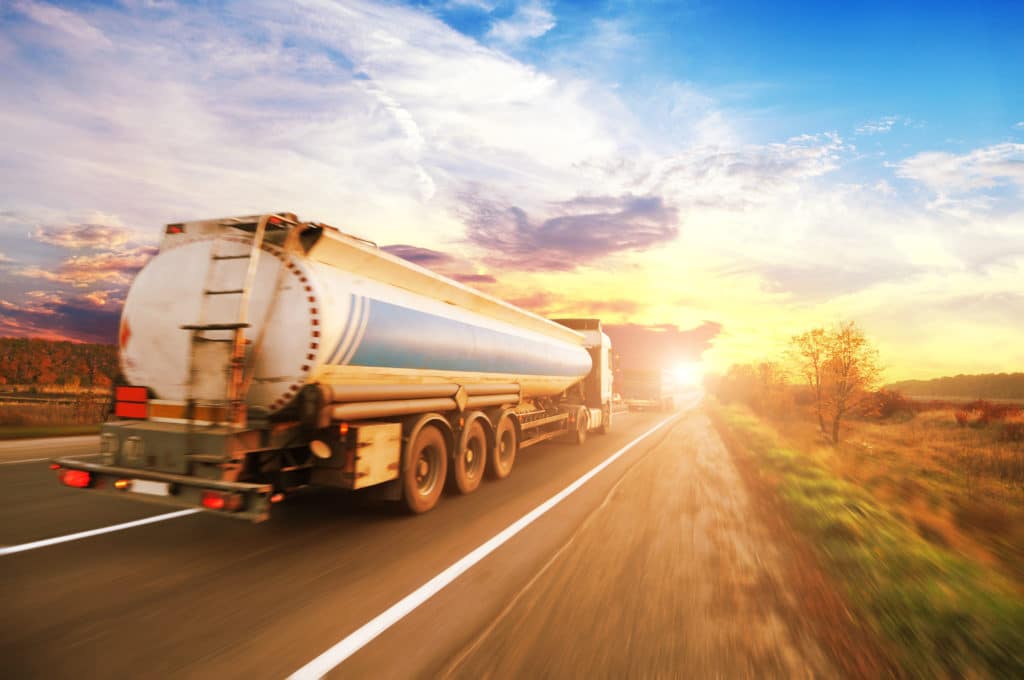
A dangerous goods accident is an accident in which toxic, corrosive or otherwise hazardous substances are involved. This is typically the case when so-called dangerous goods transporters are involved in an accident. You can recognise a hazardous goods transporter by special warning symbols. These are clearly visible on the transporter in the form of orange-coloured stickers. The labelling can be used to identify the degree of danger of the goods contained in the van. The hazardous situation can thus be quickly categorised by trained rescue personnel and the necessary measures can be initiated.
NoteOrange-coloured warning signs on the load must indicate what is in the transporter. When contacting the emergency call centre, be sure to tell them the number of the orange dangerous goods warning sign.
What dangerous goods are there?
§ Section 2 of the Act on the Transport of Dangerous Goods (GGBefG) defines which substances fall under dangerous goods. In general, a distinction is made between goods that are dangerous during transport:
- pose a risk to the health and life of humans and animals
- that can cause damage to nature
- pose a risk to important public goods such as groundwater or threaten public order
The numbers on the dangerous goods warning signs divide the dangerous goods into 9 hazard classes as standard.
- 1: Explosives or articles containing explosives
- 2.1, 2.2, 2.3: Flammable, non-flammable or toxic gases
- 3: Flammable, liquid substances
- 4.1, 4.2, 4.3: Flammable and self-igniting substances
- 5.1, 5.2: Flammable substances and organic peroxides
- 6.1, 6.2: Toxic and infectious substances
- 7: Radioactive substances
- 8: Corrosive substances
- 9: Other dangerous goods
What should I do in the event of a dangerous goods accident?
To avoid accidentally igniting explosive substances or severely cauterising yourself, special care must be taken in the event of a hazardous goods accident! It is very important that you do not come into contact with the hazardous goods. If a hazardous material has escaped during the accident, you should always stay away from the scene of the accident.
Our tipSecure the accident site with sufficient distance and wait at least 60 metres away from the hazardous goods for the rescue services.
If the driver of the hazardous goods transporter involved in the accident is stuck in the transporter or has come into contact with the hazardous goods, you should inform the emergency services immediately but not help yourself. In this case, your own safety comes first. In this case, you are not guilty of failing to provide assistance. Specially trained personnel can provide better assistance in this case. Leave the work to the police and fire brigade!
Checklist after a dangerous goods accident
- Keep your distance from hazardous goods
- Secure the accident site as far as possible
- Make an emergency call
- First aid and rescue is provided by specialised personnel
- If necessary, make a witness statement or look for witnesses
Who must eliminate the threat to the environment?
A large number of rescue workers are often required to deal with the consequences of an accident involving hazardous goods. Hazardous goods often pose an increased risk to humans, animals and the environment. Neutralising substances and processes are used to prevent long-term damage to nature.
Steps towards fair claims settlement
Have you been involved in a dangerous goods accident through no fault of your own? Then play it safe and contact us directly:
- Our competent team of experts will discuss the right next steps with you.
- If required, we can organise an expert to come to your home. He will prepare the important independent expert opinion
- Your full claims are calculated by specialised teams of lawyers using our software
- Your optimised claims are asserted with the insurance companies liable to pay benefits and paid out for you
- If required, our network of tested, reliable specialist workshops and replacement vehicles will support you
- You will be kept up to date on all regulatory progress via our innovative HIS (customer information system).
We cannot undo your accident with hazardous goods. But we will make the best of it for you, we promise!